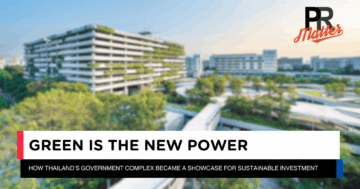
Thailand has taken another ambitious step toward redefining public infrastructure for the 21st century with the completion of Government Complex Building C in Bangkok. Developed by Dhanarak Asset Development Company Limited (DAD), the building is being hailed as a flagship example of how state architecture can be both environmentally regenerative and deeply human-centered.
Located on Chaeng Watthana Road, the newly completed Building C is a centrepiece of Thailand’s evolving “Low-Carbon City Working with Nature” vision. The design signals a turning point in the relationship between public architecture and environmental responsibility. It also represents a broader cultural shift in how Thailand’s government facilities serve not only their administrative function but also the well-being of their citizens and the planet.
Building C is not just another addition to the capital’s administrative skyline. It is a carbon-intelligent structure that merges clean energy systems, ecological design, and inclusive architecture into a coherent vision of what government infrastructure should look like in a climate-conscious future.
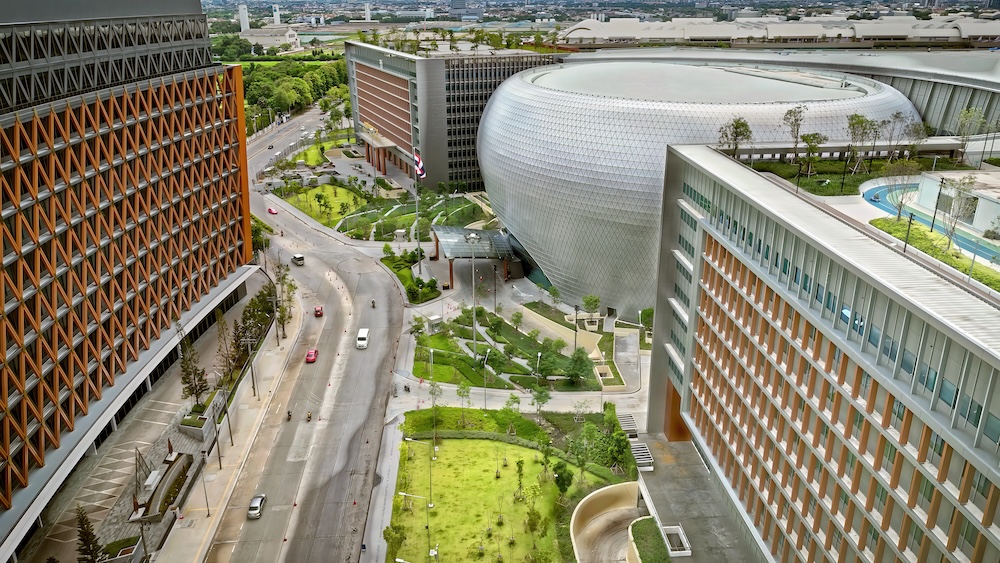
The project adopts the core principle of shifting “from energy consumer to clean-energy producer.” With this vision, DAD has constructed a facility that does more than reduce its carbon footprint. It actively contributes to environmental restoration and energy independence. At the heart of the transformation is a comprehensive clean-energy system that integrates solar energy production and advanced energy storage technologies. The building now generates over 2,200 kilowatt-hours of solar energy daily, placing it at the forefront of Thailand’s transition toward a public-sector clean energy model.
DAD President Dr. Nalikatibhag Sangsnit described the initiative as a new benchmark for how modern public infrastructure can improve quality of life while simultaneously promoting environmental health. He noted that the project exemplifies how government spaces can harmonise with nature without compromising efficiency. Rather than simply being administrative assets, such buildings can serve as living systems that evolve with their communities and ecosystems.
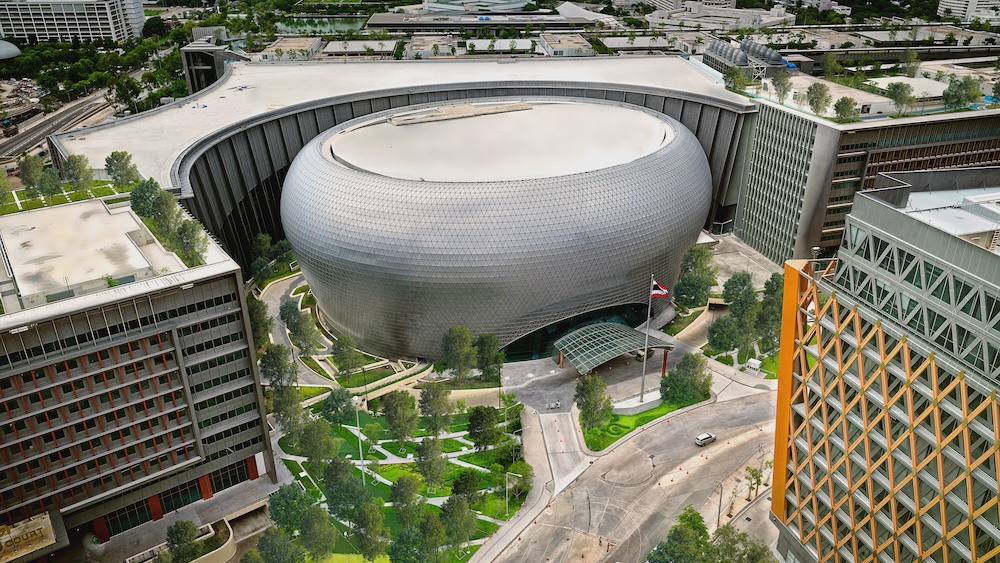
The architectural identity of Building C is rooted in Thai cultural heritage. The structure draws inspiration from the shape of a “pod duang” coin, a traditional symbol of prosperity and social stability in Thai society. This symbolic foundation has been interwoven with universal design principles that ensure inclusivity, safety, and comfort for all users. The result is a space that accommodates diverse needs while encouraging openness and collaboration. From shared workspaces and creative activity zones to relaxation areas, the design supports interaction and human connection in an official setting.
The building’s advanced energy systems reflect an intelligent layering of passive and active strategies. A Solar Shield façade reduces heat gain by up to 37 percent, significantly lowering cooling needs. This is further enhanced by a passive cooling system and a centralised District Cooling infrastructure that maximises energy efficiency. An innovative Radiant Floor System distributes cool air evenly across the interior, helping to minimise reliance on air conditioning and lowering energy demand.
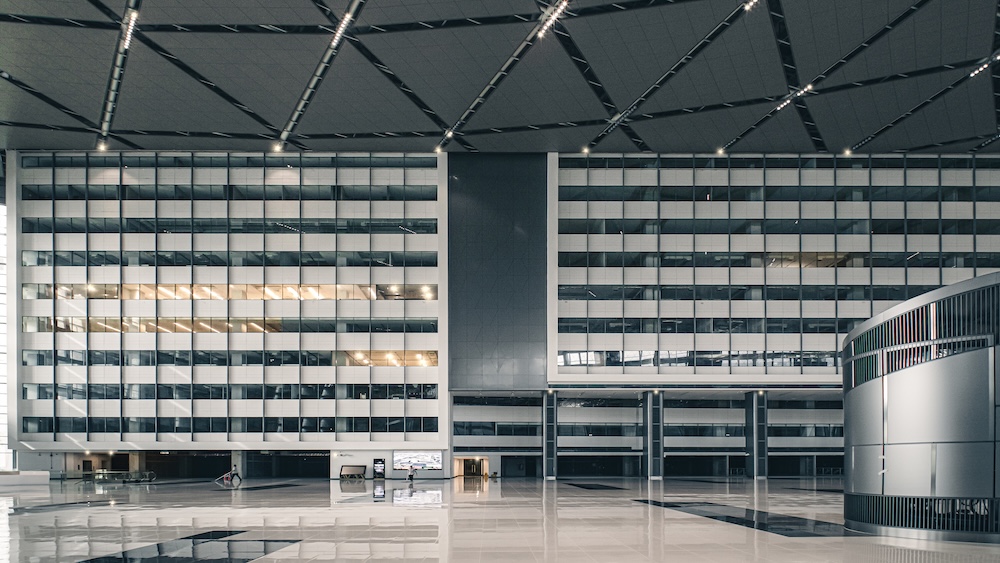
In terms of air quality, the building employs MERV-13 air filtration that removes more than 85 percent of fine particulates, including PM2.5, allergens, and other pollutants as small as 0.3 microns. This aligns with growing health and sustainability priorities in urban environments, where air pollution is a leading public concern.
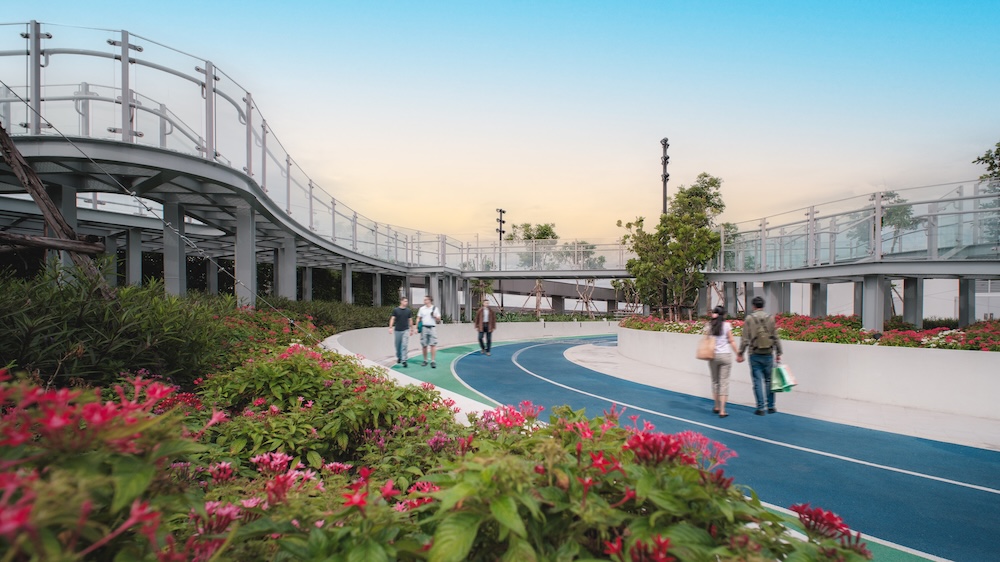
Beyond its energy performance, Building C also advances carbon-conscious construction practices. More than 60 percent of the building materials were sourced locally, reducing emissions related to long-distance transportation. Additionally, the building’s 19,900-square metre rooftop has been transformed into a green sky garden that not only insulates the structure but also serves as a carbon sink and a biodiversity zone. The garden helps regulate internal temperatures, filters the surrounding air, and provides space for relaxation and recreation.
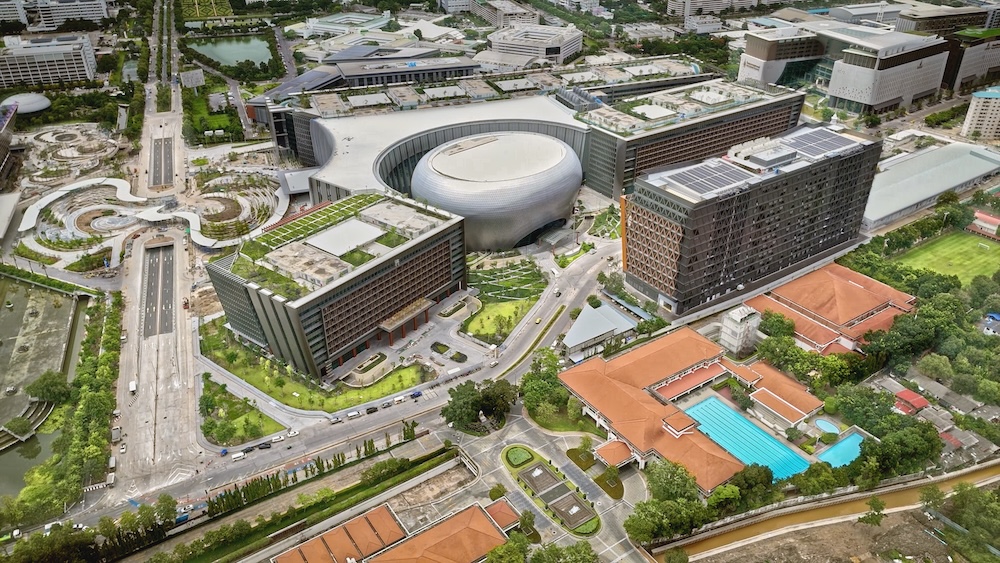
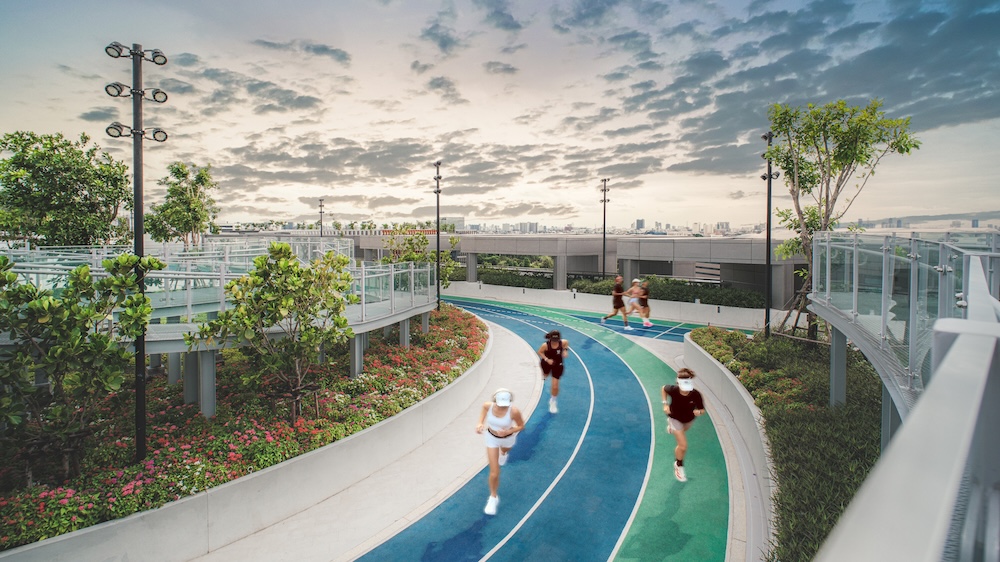
These features collectively position Building C as a landmark example of a 21st-century “Carbon-Intelligent Building.” Unlike conventional buildings, which passively consume resources, this structure actively contributes to environmental stability. It filters air, absorbs carbon, and sets a new standard for how government buildings can support national sustainability goals.
According to Dr. Nalikatibhag, the building is more than just infrastructure. It is a symbol of what a future-ready, government-led city can achieve. He emphasised that Building C represents a new type of public space, one that meets the needs of today while preparing for the demands of tomorrow. The project reflects a philosophical and practical shift from linear construction to circular, regenerative design.
This model is particularly relevant as governments worldwide face mounting pressure to lead by example in the climate crisis. While private sector innovation often dominates sustainability headlines, the role of the public sector is just as critical. Through projects like Building C, Thailand demonstrates that government infrastructure can not only keep pace but lead in innovation, efficiency, and environmental stewardship.
In broader terms, the building also contributes to Thailand’s Bio-Circular-Green (BCG) Economy Model. The BCG framework advocates for sustainable development that integrates biotechnology, renewable resources, and circular economic principles. Building C brings these ideas into physical form, showing how policy can manifest in tangible, everyday environments that benefit both people and the planet.
The implications extend beyond the site. Building C serves as a blueprint that other government developments can emulate. It provides proof that even high-density urban facilities can be designed to harmonise with natural systems while delivering essential public services. This makes the project not only a local milestone but also a potential reference point for public infrastructure design across the region.
As cities in Southeast Asia continue to urbanise at unprecedented rates, the need for climate-adaptive infrastructure is urgent. Rising temperatures, air pollution, and energy demands are straining the resilience of existing public systems. Thailand’s approach, as seen in Building C, suggests that governments need not view sustainability as a cost but as an investment in resilience and quality of life.
The success of Building C affirms that it is possible to reimagine public spaces as dynamic environments that are both functional and forward-looking. The project blurs the boundaries between architecture, technology, culture, and nature. It transforms what was once a passive space into a living entity that breathes, evolves, and supports both its human users and its ecological context.
Thailand’s Government Complex is no longer just a seat of administration. With the addition of Building C, it becomes a statement of national intent, a demonstration that sustainability and governance can go hand in hand. In doing so, it sets a precedent for how nations might reengineer their civic spaces not only to meet the challenges of today but to embrace the possibilities of tomorrow
FAQs: Inside Thailand’s Most Advanced Government Building – A Blueprint for Carbon-Intelligent Cities
Q1: What is the main purpose of Building C at the Government Complex Bangkok?
A1: The main purpose is to serve as a model of 21st-century public architecture that integrates clean energy, sustainability, and inclusive design, setting a benchmark for carbon-intelligent urban infrastructure.
Q2: Who developed Government Complex Building C and under what vision?
A2: The building was developed by Dhanarak Asset Development Co., Ltd. (DAD) under the vision of “A Low-Carbon City Working with Nature.”
Q3: How does Building C generate clean energy?
A3: It generates over 2,200 kWh of solar energy per day through an integrated solar panel system and utilises advanced energy storage technologies for day and night efficiency.
Q4: What architectural concept inspired the design of Building C?
A4: The building is inspired by the traditional Thai “pod duang” coin, symbolising prosperity and stability, and is designed with Universal Design principles to ensure accessibility and inclusiveness.
Q5: What features support the building’s energy efficiency?
A5: Features include a Solar Shield façade reducing heat gain by 37%, passive and district cooling systems, and a Radiant Floor System that minimises the need for conventional air conditioning.
Q6: How does Building C address indoor air quality?
A6: It uses MERV-13 filtration systems capable of removing over 85% of fine particulates such as PM2.5 and allergens, enhancing health and comfort for building occupants.
Q7: What sustainable construction practices were used?
A7: More than 60% of construction materials were locally sourced to reduce carbon emissions from transportation, and sustainable methods were employed throughout the building process.
Q8: What is the role of the rooftop sky garden?
A8: The 19,900 sq.m. rooftop sky garden acts as natural insulation, absorbs CO₂, reduces temperature, filters air, and provides a recreational space for users.
Q9: How does Building C align with Thailand’s national strategies?
A9: It supports the Bio-Circular-Green (BCG) Economy Model and contributes to the country’s carbon neutrality goal by demonstrating regenerative public-sector design.
Q10: Why is Building C considered a “blueprint” for future cities?
A10: Because it successfully combines technology, ecology, and inclusive design into one intelligent system, offering a replicable model for sustainable and resilient government infrastructure.